
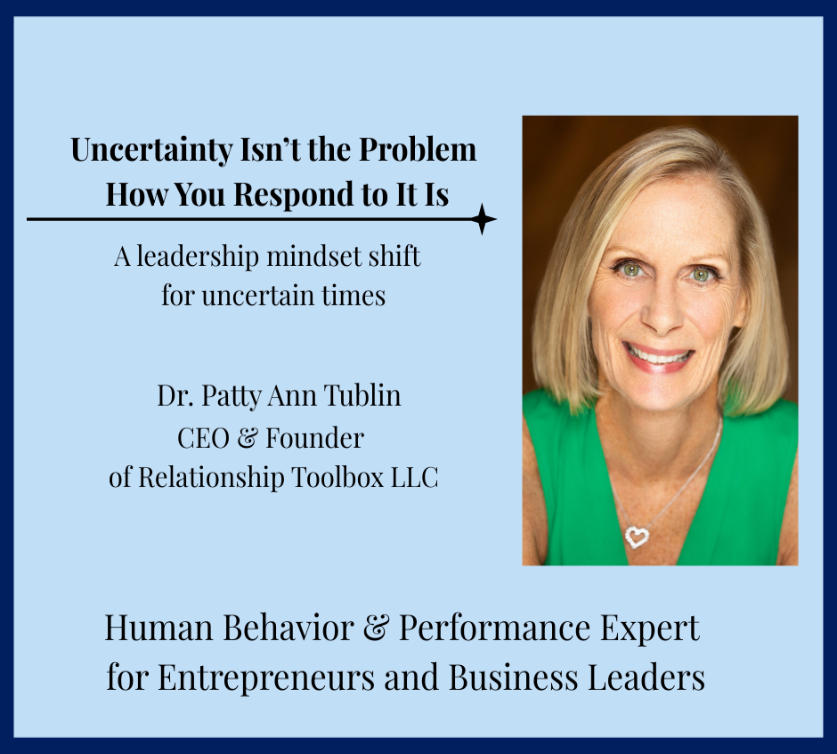
Uncertainty Isn’t the Problem — How You Respond to It Is
Uncertainty
is a part of life. We don’t like it—but it’s unavoidable.
And when
it shows up unexpectedly, it can shake more than just our plans. It disrupts
our sense of control, safety, and confidence. Whether it’s an economic shift, a
personal transition, or a moment where the future feels blurry, uncertainty has
a way of making even the most capable people feel off balance.
Here’s
the truth most people overlook – uncertainty isn’t what creates the stress. Our
reaction to it does.
A
positive mindset doesn’t make uncertainty go away. But it does change
how you experience it—and what you do next.
Why Mindset Matters in Uncertain Times
A
positive mindset isn’t about pretending everything is fine. It’s about staying
grounded enough to think clearly when things aren’t.
When
uncertainty hits, our brains tend to jump straight to worst-case scenarios.
That’s normal. But staying there drains energy, clouds judgment, and keeps us
stuck. A positive mindset helps you shift from fear to forward movement—without
ignoring reality.
It
allows you to respond instead of reacting.
7 Simple Ways to Stay Steady When Nothing Feels Certain
1. Change the Story You’re Telling Yourself
When
things feel uncertain, notice the narrative running in your head.
- Ask yourself, Is this a
fact—or a fear?
- Look for what this moment might
be asking of you.
- Focus on what you can influence
today, not what you can’t control tomorrow.
That
shift alone can bring relief.
2. Create Small Anchors in Your Day
When
life feels unpredictable, routines create stability.
- Start your day intentionally—even
five quiet minutes counts.
- Move your body. It clears the
mind more than we give it credit for.
- End the day by noticing something
that went right. Small wins matter.
3. Be Mindful of What You’re Letting In
What you
consume affects how you feel.
- Spend time with people who calm
you, not ones who amplify fear.
- Limit how much negative news you
take in—it adds up.
- Choose content that reminds you
what’s possible, not just what’s wrong.
4. Stay Present Instead of Spiraling
Most
anxiety lives in the future.
- Slow your breathing when you feel
overwhelmed.
- Name what you’re feeling without
judging it.
- Accept that you don’t need all
the answers right now.
Presence
brings clarity.
5. Keep Your Goals Manageable
Big
plans can feel heavy during uncertain times.
- Focus on the next right step.
- Adjust expectations without
beating yourself up.
- Acknowledge progress—even when it
feels small.
Momentum
builds confidence.
6. Turn Outward
Helping
others shifts perspective.
- Check in on someone.
- Offer support where you can.
- Share what you know or have.
Contribution
reminds us we matter.
7. Be Kinder to Yourself
Uncertainty
can bring out harsh self-talk.
- Remember: you’re human.
- Replace criticism with curiosity.
- Rest when you need to.
Self-compassion
isn’t weakness—it’s grounding.
When Uncertainty Becomes a Turning Point
Uncertainty
has a way of forcing reflection. It interrupts autopilot. And while that can be
uncomfortable, it often leads to growth we wouldn’t have chosen—but end up
needing.
You may
find new clarity.
You may strengthen relationships.
You may discover resilience you didn’t know you had.
Final Thought
Uncertainty
doesn’t mean you’re failing. It usually means you’re in transition.
A
positive mindset won’t eliminate challenges—but it will change how you walk
through them. And over time, that changes everything.
Stay present. Stay connected. And trust that this moment is shaping something meaningful—even if you can’t see it yet.
