
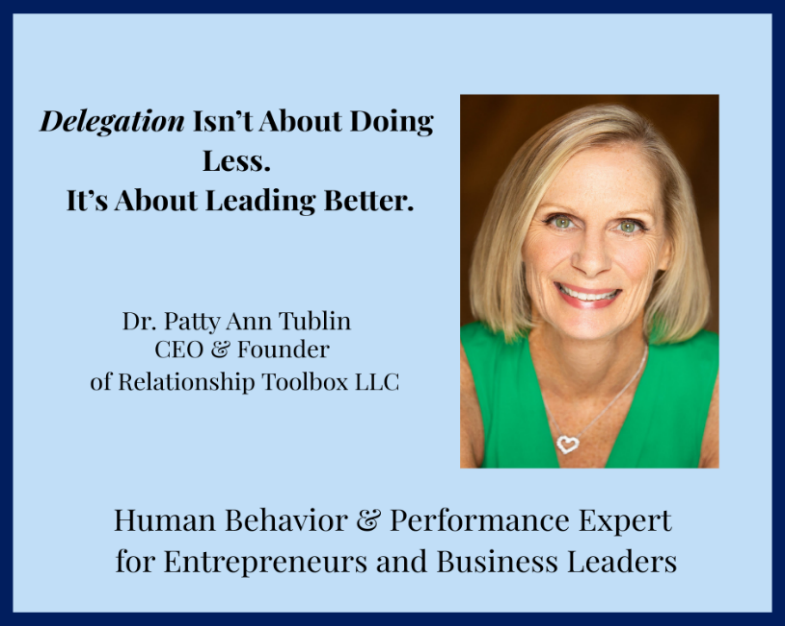
Delegation Done Right: Even in an AI-Driven Workplace
If there’s one leadership skill that separates high-performing teams from overworked, overwhelmed ones, it’s delegation.
And not the kind that sounds good in theory—the kind that actually works in practice.
AI is accelerating how work gets done. Tasks move faster. Information is easier to access. Output is quicker.
Yet many leaders feel more overloaded than ever.
That’s not an AI problem.
That’s a delegation problem.
AI doesn’t remove the need for delegation. It exposes how well—or how poorly—leaders already delegate.
Effective delegation isn’t about getting things off your plate. It’s about building capability, increasing capacity, and creating clarity. When delegation is done well, people feel trusted. They understand ownership. And they grow.
Here’s what strong delegation actually looks like.
Clear outcomes—not just tasks.
Good delegation starts with clarity. Not just what needs to be done, but why it matters and what success looks like. AI can help with drafts and first passes, but leaders still need to define the outcome. Clarity prevents rework and builds confidence.
Matching work to people—not just availability.
Delegation isn’t dumping. It’s a thoughtful decision about who should own what based on strengths and development. The best leaders ask, Who grows by owning this? That’s how teams develop—and how leaders stop becoming bottlenecks.
Support without hovering.
Delegation requires presence, not micromanagement. Support means setting expectations, checking in at the right moments, and being available for guidance. It does not mean rewriting the work or stepping in the moment things feel uncomfortable.
Where delegation breaks down is usually here:
- Tasks handed off with no context
- Micromanaging every step
- Holding onto control because “it’s faster if I just do it myself”
That last one is the most expensive sentence in leadership.
When leaders don’t delegate well, the consequences ripple. You become the bottleneck. Teams disengage. Burnout becomes inevitable. And the leadership pipeline weakens.
AI can optimize workflows.
It cannot build leaders.
Delegation is a skill—and it can be learned.
- Identify what only you can do.
• Match work thoughtfully.
• Define what “done well” looks like.
• Provide context and authority.
• Follow up without hovering.
Delegation isn’t about doing less.
It’s about doing what matters most—and letting others do the same.
So the next time you think, “It’ll just be quicker if I do it myself,” pause and ask:
Is this a task…
or is this a teaching moment?
Because the best leaders don’t just deliver results.
They develop people who can deliver them too.
