
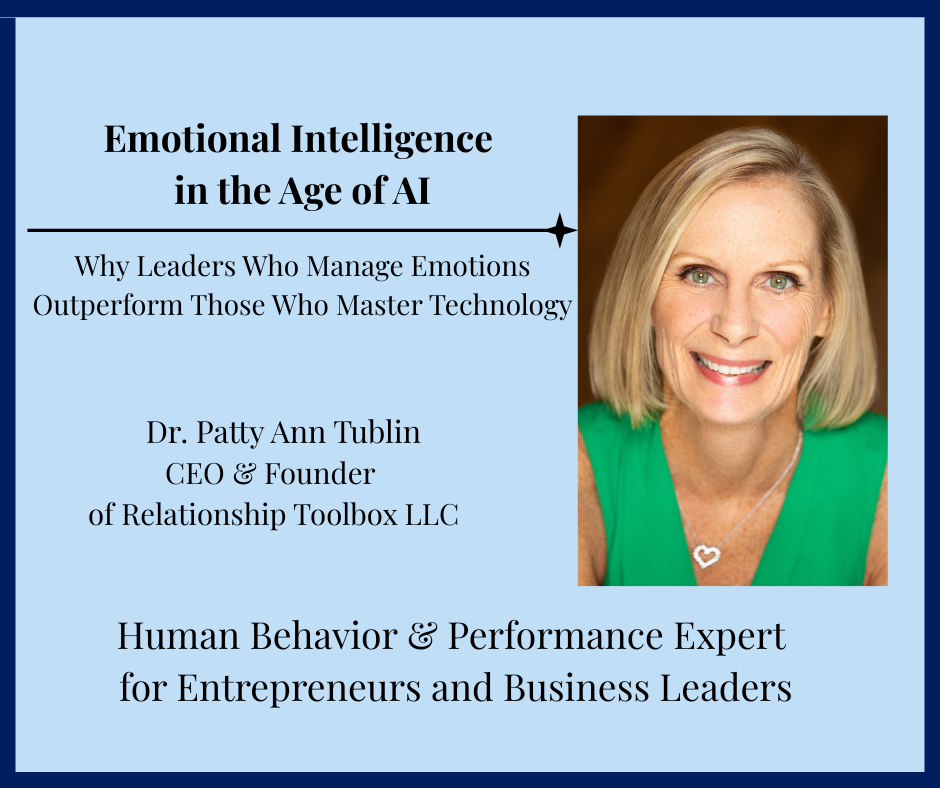
AI Is Getting Smarter. Many Leaders Aren’t: Why Emotional Intelligence Is the Real Competitive Advantage
AI is moving fast.
Faster than most leaders expected. Faster than most organizations are emotionally prepared for.
Everywhere I go, I see companies investing heavily in technology—AI tools, automation, dashboards, data models—believing that smarter systems will naturally lead to better decisions and higher performance.
They won’t.
Not without emotionally intelligent leadership.
Because here’s the truth no one is saying out loud: AI doesn’t remove emotion from leadership—it amplifies it.
AI Speeds Everything Up… Including Emotional Reactivity
AI delivers information instantly. Predictions, insights, recommendations—sometimes before leaders have even fully defined the question.
But speed creates pressure. And pressure exposes behavior.
Under pressure, emotionally unskilled leaders tend to:
- Overreact to data without context
- Become reactive or defensive when challenged
- Mis-read people while over-trusting algorithms
- Make fast decisions that create unintended human consequences
AI doesn’t cause these issues. It reveals them.
The leaders who struggle most with AI adoption aren’t lacking intelligence or experience. They’re lacking emotional regulation and self-awareness.
Emotional Intelligence Is the Filter Between Data and Judgment
AI can tell you what is happening.
It cannot tell you how to lead people through it.
That’s where emotional intelligence comes in.
Emotionally intelligent leaders know how to:
- Pause before reacting to new information
- Separate facts from fear
- Regulate their own emotional state under uncertainty
- Read the emotional climate of their team—not just the data
Without that filter, AI insights become noise, stress, or misused power.
With it, AI becomes a tool—not a threat.
The Real Risk Isn’t AI. It’s Emotionally Unaware Leadership.
I’ve watched leaders hide behind technology rather than engage with people.
“I’m just following the data.”
“The system says this is the best option.”
“The AI model supports this decision.”
Those statements may sound objective—but they often mask avoidance, fear, or a lack of relational skill.
People don’t resist AI because they’re anti-technology.
They resist leaders who use technology without empathy, context, or trust.
Low emotional intelligence turns AI into a blunt instrument.
High emotional intelligence turns it into a strategic advantage.
Self-Management Is Now a Leadership Performance Skill
In an AI-driven world, leadership isn’t about having all the answers.
It’s about managing yourself when the answers appear to come faster than ever before.
The leaders who will outperform in this era are the ones who can:
- Stay grounded when data is overwhelming
- Hold emotional steadiness during rapid change
- Create psychological safety while introducing new technology
- Lead conversations—not just implementations
AI may change how work gets done.
Emotional intelligence determines how well it gets done—and at what cost.
