Communication
The Art of Effective Communication: The Key to Business Mastery & Success
By Dr. Patty Ann
Effective communication is the foundation of strong leadership, collaboration, and success. It ensures that messages are understood as intended, fostering clarity, engagement, and trust in both professional and personal settings. However, communication breakdowns often lead to misunderstandings, conflict, and inefficiency.
In this article, we’ll explore what effective communication looks like, how it functions within teams and individuals, and provide five strategies to improve it.
What Does Effective Communication Look Like?
Effective communication is clear, purposeful, and fosters understanding between parties. Here’s a visual comparison of effective vs. ineffective communication across key elements:
Comparison of Effective vs. Ineffective Communication
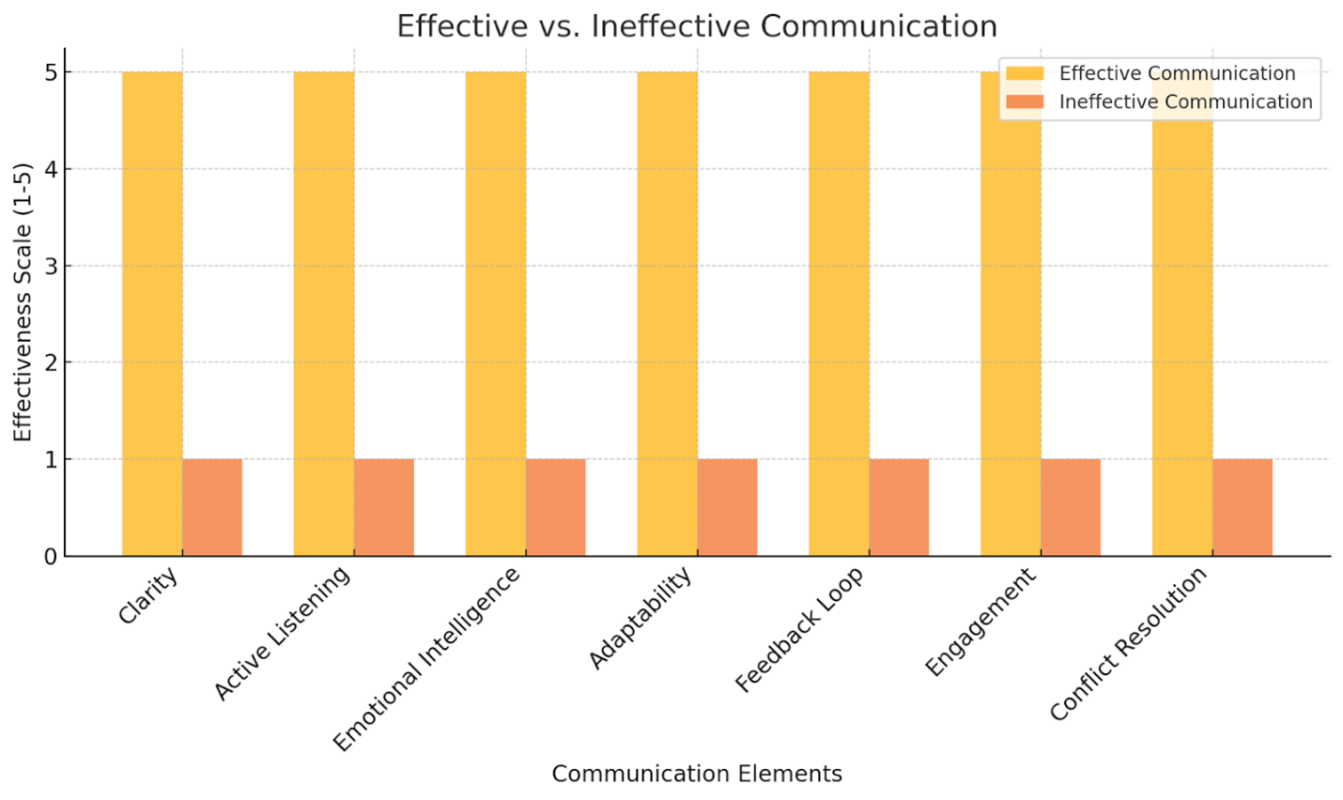
The chart above illustrates how different communication elements perform on a scale from 1 (ineffective) to 5 (effective).
- Clarity: Well-structured messages prevent confusion.
- Active Listening: Engaged listening leads to better understanding.
- Emotional Intelligence: Managing emotions fosters productive conversations.
- Adaptability: Adjusting communication to different audiences ensures the message resonates.
- Feedback Loop: Two-way dialogue confirms understanding.
- Engagement: Encourages meaningful interactions.
- Conflict Resolution: Resolves issues before they escalate
How Effective Communication Shows up in Teams vs. Individuals
⦿ In Teams
When communication is effective, teams operate with alignment, trust, and efficiency. Characteristics include:
✅ Transparency – Information is openly shared.
✅ Collaboration – Team members contribute and support each other.
✅ Reduced Conflict – Misunderstandings are addressed early.
✅ Engagement – Employees feel heard and motivated.
Poor communication leads to:
❌ Confusion about roles and expectations.
❌ Low morale due to unclear or missing feedback.
❌ Increased tension from unresolved conflicts.
⦿ On an Individual Level
Strong communicators:
✅ Listen actively instead of waiting for their turn to talk.
✅ Adapt their message based on their audience.
✅ Use body language and tone effectively.
✅ Manage emotions to prevent reactive responses.
✅ Ask clarifying questions instead of making assumptions.
Those who struggle with communication often:
❌ Interrupt or dominate conversations.
❌ Fail to consider their audience’s perspective.
❌ Avoid eye contact or display closed-off body language.
❌ React emotionally instead of responding thoughtfully.
❌ Assume rather than clarify.
5 Ways to Improve Communication Effectiveness
- Master Active Listening
- Focus fully on the speaker, avoiding distractions.
- Use clarifying questions like, “Can you elaborate on that?”
- Paraphrase to confirm understanding: “So what you’re saying is…”
- Be Intentional with Your Words
- Use clear and concise language.
- Structure thoughts logically to enhance understanding.
- Avoid filler words or unnecessary jargon.
- Use Nonverbal Cues Effectively
- Maintain eye contact to show engagement.
- Use open gestures to create a welcoming presence.
- Monitor tone and pacing to match the conversation’s intent.
- Adapt to Different Communication Styles
- Observe how others communicate and adjust accordingly.
- Use assessments like DISC or MBTI to understand preferences.
- Balance directness with empathy for better rapport.
- Create a Feedback Loop
- Encourage feedback by asking, “Does that make sense?”
- Repeat key points for clarity.
- Provide constructive feedback to ensure alignment
Final Thoughts
Effective communication transforms relationships, teams, and businesses. By actively listening, being clear and intentional, using nonverbal cues, adapting styles, and creating feedback loops, you can significantly enhance how you communicate.
Start small—implement one of these strategies in your next conversation and watch the impact it has!
Dr. Patty Ann
#EffectiveCommunication #CommunicationMatters #ConflictResolution #ClearCommunication #SuccessThroughCommunication
Related insights
What 30 Years of Human Behavior Research Tells Us About AI and Leadership
Dr. Patty Ann
What 30 Years of Human Behavior Research Tells Us About AI and Leadership I have coached entrepreneurs through market crashes. Corporate executives through organizational upheaval. Leadership teams through every kind of disruption you can name. And I can say this with full conviction: What is…
AI Didn't Create the Leadership Gap in Your Organization. It Just Exposed It.
Dr. Patty Ann
AI Didn’t Create the Leadership Gap in Your Organization. It Just Exposed It. Here is what I am seeing across boardrooms and executive teams right now. Companies are adopting AI faster than their leaders can manage the human disruption it creates. Anxiety is rising.Resistance is…
Your Strategy Isn’t the Problem. Your Behavior Might Be.
Dr. Patty Ann
Your Strategy Isn’t the Problem. Your Behavior Might Be. If growth has slowed, your first instinct is to revisit strategy. New market. New hire. New system. New AI tool. But after working with high-performing entrepreneurs and executive teams for decades, I can tell you this: Most growth stalls…